The Masses Murmur

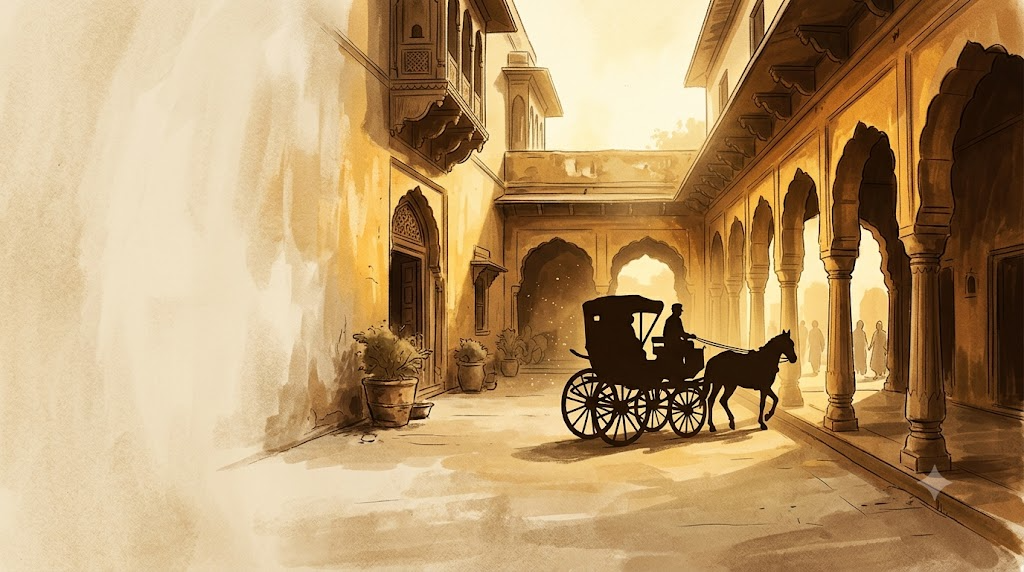
Azhwarkkadiyaan’s journey from Periya Piratti Sembiyan Madevi’s palace to Princess Kundhavai’s royal residence took him through the winding, sun-dappled streets of Pazhaiyarai. What he saw as he wove his way through the bustling crowds filled his heart with a warm, quiet delight. Today happened to be the birthday of Kannan—and ah, how wonderfully enthusiastic the residents of this city were! They had surrendered themselves entirely to celebration and worship, the air thick with the scent of jasmine and burning camphor. There was no doubt in his mind, none at all, that Vaishnavism (the worship of Vishnu) had planted deep roots in Chozha Nadu and would only grow from strength to strength.
As for Saivism (the worship of Shiva), it would have been surprising indeed if it had not occupied pride of place here. For the past hundred years, the Chozha kings had been establishing grand Shiva temples across the country with the utmost devotion. The beautiful Thevaram songs (ancient Tamil devotional hymns to Shiva) of the three greatest saints were sung in their pillared halls, carrying the campaign of faith to the simple folk; elaborate chariot festivals were held with great pomp, drawing thousands to the streets. But none of this grand spectacle had sounded the death knell for Thirumaal or his fame. Kannan, said to be the ninth and most complete incarnation of Vishnu Murthy, had utterly captured the popular imagination. His many adventures, his divine leelai (playful miracles), and indeed his entire life played out in the pastoral lands of Mathura, Gokulam, and Brindavanam, ensured he stayed in their hearts forever. The Bhagavada groups (bands of devotional singers) that abounded here, the many street-plays, the sheer number of artists intent on portraying Kannan’s life—Ammamma! It was impossible to describe them all. They seemed to have multiplied like the monsoon grass since Azhwarkkadiyaan had last visited this fair city. They gathered crowds at every street corner, drawing thunderous applause and joyous shouts, adding to the thick, festive air. And still, more actors and singers were trickling in steadily from the dusty villages surrounding the city, drawn like moths to the warmth of such eager audiences.
One such street-play troupe seemed to have arrived just that instant, setting up their simple props in the dust. Their little contingent consisted of Vasudevar, Devaki, Krishnan, Balaraman, and the wicked king Kamsan. Their songs, their energetic little dances, and their witty dialogues seemed far superior to the others, and naturally, they drew a large ring of onlookers, Azhwarkkadiyaan included. Kamsan and young Krishnan were presently engaged in a fierce verbal battle, and the stout Vaishnavite paused, leaning on his staff, to watch the charming performance. Played by a very earnest young boy, Kannan’s many accusations against his ruthless uncle were delivered with a most endearing lisp.
“Come and fight me!” the child cried out finally, stamping a small, ankleted foot.
Kamsan responded with an appropriate show of terrible outrage. “Adei, you cunning little rogue, Krishna!” he bellowed, assuming a truly creditable fury, his voice ringing out over the crowd like a peal of summer thunder. “Playing off your pretty little tricks on me, are you? Ha—none of them will work! I shall kill you now, you and your precious brother Balaraman, and your father Vasudevar. And see that Vaishnavite over there, covered with sacred naamam signs (the holy marks worn on the forehead by worshippers of Vishnu) applied with sandalwood paste? I’m going to throttle him as well!”
The crowd gathered around the troupe turned as one to look at our Azhwarkkadiyaan, and a ripple of laughter went through them. The actors playing Krishnan and Balaraman darted amused looks at him as well. Quite a few members of the audience sidled up to the Vaishnavite and began to cackle right in his face. “Kek-kek-kek!”
A sudden wave of irritation slammed into Thirumalai at this blatant heckling. More than anything, he wanted to swing his stout wooden staff at these laughing idiots and deliver a few choice blows—especially to that ridiculous Kamsan. But what was the point in trying to bash the fellow’s head? None of his trusty blows would have the least effect. Kamsan, in keeping with his villainous costume, wore a massive, heavy wooden mask with a horrifying moustache and terrible, bared teeth painted in a variety of garish colours. Besides, wielding a staff on the good people hereabouts wouldn’t exactly be appropriate on a festival day.
Thirumalai shook his head, gave a small sigh, and regretfully slipped away from the edge of the crowd. That man who played Kamsan, though—how he had yelled his lines! Now, where exactly had Azhwarkkadiyaan heard that booming voice before? For he had heard it, of that he was absolutely certain. The question was, where? And to whom did it belong?
Mulling over these little mysteries as he walked along the sun-baked streets, Azhwarkkadiyaan soon noticed something else: a gradual, unsettling change in the people he was passing by. They appeared to have suddenly lost all their recent enthusiasm. Why were they dispersing so quickly? What had caused this abrupt sea-change? Even the songs, the dancing, and the melodious music had ground to a halt. Instead, the townsfolk had gathered into tight little cliques and appeared to be murmuring furtively amongst themselves. What were their secrets? And why, the moment their whispered discussions ended, did they hurry away so rapidly? Dadaal! Dadaal! Really, why were heavy wooden doors being banged shut in such quick succession all down the street?
The reason revealed itself in just a few moments. It was the sharp, rhythmic beating of a parai, carrying news of a runaway spy—an announcement that had, as he would soon learn, set even Princess Kundhavai trembling. So depressing was this unexpected proclamation that it quenched the city’s bright festive spirit as quickly as a bucket of water on a small fire. People looked pinched and drawn. They stared with open suspicion at those who walked past them all alone, or at anyone with whom they claimed no familiar acquaintanceship. Azhwarkkadiyaan himself was subjected to a good many doubtful stares by passers-by, who immediately hurried away the moment he happened to catch their eye.
Thirumalaiyappan guessed the reason behind this reaction well enough. His quick brain easily pieced together the subject being discussed by these secretive little knots of people he stumbled upon by the roadside. Random words that fell upon his sharp ears only served to confirm his suspicions. Every whispered conversation, it seemed, revolved around the wretched Pazhuvettarayar brothers and their increasingly tyrannical rule.
But then, wasn’t it entirely natural for the people of this city and the residents of the nearby villages to feel this way? After all, hadn’t the Pazhuvoor lords been the means of removing the ailing Emperor Sundara Chozhar from his beloved principal seat here in Pazhaiyarai, taking him away to Thanjavur? An emperor, moreover, who had been immortalised by great poets in verse: “… Pazhaiyarainagar Sundara Chozharai Yaavaropparithonnilathe!” (None can compare to Sundara Chozhar of Pazhaiyarai city). Hadn’t Pazhaiyarai steadily lost its warm lustre in its lord’s absence?
Surely, the people murmured, it would be a city radiant with festivities, dazzling a thousand times more brightly, if Sundara Chozhar were still here. The many street-play troupes that currently entertained the general public in the dust would have gathered, finally, in the grand royal courtyard. The Chakravarthy would have welcomed them all, rewarding the many singers, dancers, the paanars, actors, and poets as richly as they merited. Ah, wouldn’t it seem as though the whole of Chozha Nadu had gathered in the city to partake of its delights? Every little shop and stall would be deluged by customers, doing business a hundredfold. And wouldn’t the streets resound with dance, song, sword-fights, and silambattam (the ancient martial art of stick-fighting) performances when the deity Venugopala Swamy began His divine procession from the Nandhipura Vinnagara Temple that night? Everything was ruined now, they grumbled. Ruined by the Pazhuvettarayars.
And this was not all. The good citizens of Pazhaiyarai nursed yet another massive, aching grievance. Their beloved Prince Arulmozhi Varmar—dearer to them than anyone else among the royals—was presently far away in Eezham, fighting a desperate and bloody war. Ten thousand men from the four Padaiveedu (military settlements) of Pazhaiyarai had accompanied him across the sea, braving the dense wilds, terrible beasts, treacherous climates, and wretched mountains. They were engaged in upholding the pride and valour of Thamizhagam, raising high the standard of Tamil integrity. Why, hadn’t the brave young Velir (a title of nobility) of Kodumbalur marched to Ilankai, heading an army himself, only to take a cruel spear to his chest and embrace death upon the battlefield? Hadn’t the rest of his contingent fought to the bitter end as well, gaining honourable deaths?
And here was young Prince Arulmozhi Varmar, leading his armies even now, seeking to soothe those grieving souls, fighting to uphold their honourable sacrifice and ensure that the tiger flag flew high. Meanwhile, these Pazhuvettarayars—symbols of wretched tyranny—were seemingly refusing to send him the food grains, clothes, money, and weapons that would mean the very survival of his men! How desperately unjust. Had anyone ever heard of such things? What on earth were all those enormous granaries in Thanjavur for, overflowing as they were with rice? What purpose, for that matter, did the royal treasuries serve, brimming with gold garnered from a hundred years of conquests? What use were money and grain if they could not be handed to Chozha warriors in their darkest time of need? Surely the Pazhuvettarayars were not planning to bundle up all that wealth and hoist it on their shoulders when they died, carrying it all the way to Yamalokham (the realm of the Lord of Death)?
Such were the many bitter mutterings among the people of Chozha Nadu in recent times, and Thirumalaiyappan was perfectly aware of them. Pazhaiyarai’s citizens, naturally, had more cause than the rest to be deeply dissatisfied: ten thousand of the city’s men might be fighting a war in Ilankai, but their worried families, their women, and their children still resided right here, didn’t they? It was only natural, then, that the sudden drum-beat announcement about a runaway spy and the strict orders for his apprehension—issued by the much-vaunted Pazhuvettarayar brothers—found very little favour with them. Far from it; the parai only served as a fresh excuse for the city’s residents to air their many grievances.
A spy indeed, many scoffed amongst themselves in the shadows. Which country would likely be brazen enough to send one amongst us, when the great tiger flag flies high, announcing its unquestioned superiority from the river Vada Pennai in the north all the way to the tip of Kumari in the south? Which foolish king would ever dare to slip a spy into Chozha Nadu? No, no, this is just another of the Pazhuvettarayars’ clever, wicked ruses. Should they ever take a dislike to a man, they simply brand him a spy and issue orders for his imprisonment! Drag him straight to their famed, dark dungeons, no doubt. Still, the elders cautioned, such affairs are none of our business. These are powerful men with the absolute authority to accomplish anything they wish here, unjust or otherwise. Besides, branding someone a spy means that no local body, not even the wise men of the town’s Panchayat (village council), will dare to question them, doesn’t it?
Thus did the good people of Pazhaiyarai murmur amongst their acquaintances, discussing royal affairs in hushed, anxious voices. Azhwarkkadiyaan gleaned every little bit of information he could with his trusty ears, supplementing the rest with his own keen intelligence. Such widespread discontent certainly boded ill, he thought.
Even as he wondered just how things would end for everyone concerned, Azhwarkkadiyaan found that he had reached Princess Kundhavai’s royal residence. The beautiful Chozha princess, Ilaiya Piratti, had always evinced considerable delight in conversing with him about worldly matters. The Vaishnavite had earned quite a name for himself as a seasoned traveller, and many a pleasant hour had she spent, completely enthralled, as he recounted his many adventures in the distant lands through which he journeyed. Keenly interested in learning about anything or anyone new, Kundhavai also greatly enjoyed Azhwarkkadiyaan’s stirring recitals of the many Azhwar pasurams he had rooted out, not without great effort, and memorised. In consequence, her welcome for him was always a most gracious one; she made sure to enquire after him and his family, her countenance invariably agreeable and full of good humour.
Today, however, the princess’s lovely features and her manner of speech seemed entirely different. Kundhavai’s expressive face indicated that her attention was fluttering elsewhere; her words, as she faltered uncharacteristically, revealed a deep, hidden agitation—a marked departure from her usual, composed self.
“Well, Thirumalai? I hope I see you well,” she welcomed him, her voice tight. “And so—what news? Why an audience?”
“I confess there seems to be no special need for one, Thaaye. Forgive me—but I assumed you wished to converse with me, as is the norm, about various worldly matters. Please accept my apologies. I shall take my leave—”
“No, don’t! Stay a while. I did wish to see you, after all—”
“It almost slipped my mind, Thaaye—but I have just come from the Periya Piratti’s presence, and she bid me here with an important message. She wished to meet you.”
“Certainly. I’ve every intention of visiting her, in any case. Before that, however—do tell me about your journey. Where have you been?”
“Everywhere from Kumari in the south, to Vengadam in the north.”
“And—what did people talk about?”
“Most speak of the Chozha reign and its magnificence. Soon, they say, Chozha dominions will stretch from the river Ganga in the north up to the Himalayas; such is its immense power…”
“And—?” she pressed.
“Much is spoken of the Pazhuvettarayars and their valour. The principal reason for the Chozha Empire’s present splendour and rapid ascendance, they say, is the Pazhuvoor lords’ dauntless courage and—”
“Enough,” Kundhavai interrupted softly. “What else?”
“Your brothers are held in great esteem and affection. Prince Arulmozhi Varmar, in particular, owns pride of place in their hearts; their love for him defies description.”
“Hardly surprising, that. Anything more?”
“Many wondered why the Chozha Emperor’s beloved daughter remains unmarried, yet. I was asked this myself, quite often.”
“And what was your answer?” she asked, a faint, wry smile touching her lips.
“That the prince worthy of our beloved princess hadn’t yet been born in this world!”
“Upon my word—! Really, Thirumalai, if the one who’s to wed me is yet to be born, I shall be a doddering old woman by the time he’s a youth! Enough of me now, if you please. Is there anything else, at all?”
“Why ever not? Many have expressed the greatest astonishment, for example, at the news that the great Saivite saint, the most pious Madhuranthaka Thevar, has entered quite abruptly into the state of holy matrimony—”
“And your sister?” Kundhavai asked sharply. “The one whom you claimed was destined to become a great devotee of Thirumaal, a bhakthasironmani (crown jewel among devotees) like the legendary Andal—how is she, now?”
“What of her, Thaaye? Isn’t she now Periya Pazhuvettarayar’s young queen, mistress of his great palace and all his immense wealth?”
“Not just his dominions, from what I hear—she’s the dictator of the whole of Chozha Nadu, isn’t she?”
“So it has been said, Thaaye—but why even think of her, on an auspicious day such as this? Speaking of Andal, I must tell you that I sojourned at Srivilliputhur for a while, and had the immense good fortune to learn a few of Vishnu Siddhar’s divine songs. Listen, Amma, to one of them; it deals with the sacred occasion of Kannan’s birth:
“Vanna Maadangal soozh thiruk Kottiyur Kannan Kesavan nambi piranthinil Ennai sunnam edhiredhir thoovida Kannan muttram kalanthalaraayirre! Oduvaar vizhuvaar uganthalippaar Naaduvaar nambiraan engutraan enbaar Paaduvaargalum palparai kottanindru Aaduvaargalum ayitru aaypadiye!”
[Witness, fortunate ones, the joy of the birth of Kannan! For on this day, the beauteous city of Thirukkottiyur, resplendent with many exquisite galleries and maadams, devotes itself to celebration as oil and colours are strewn about the temple courtyard. They jump and run about in delight, His devotees; songs and music fill the air as they view their beloved Lord—and thus in their ecstasy, do we see Aypadi, before our very eyes!]
“Such is Pazhaiyarai too, this day, Thaaye—just like the Ayarpadi (the cowherd settlement where Krishna grew up) of old.”
“Perhaps,” Kundhavai said quietly, her dark eyes searching his. “But Thirumalai—didn’t you hear another sort of parai drum, just a few moments ago? What was that all about, do you think?”
This, it seemed, was the exact moment Azhwarkkadiyaan had been waiting for.
“Ha, a spy—one who has escaped, too!” he said, waving a hand dismissively. “They’re offering some sort of reward for his capture—but what do I know of such things, Amma?”
“Don’t you? Not a smidgeon of suspicion as to his identity?”
“A smidgeon, yes—but I daren’t even whisper it, Thaaye. Did you know—I was subjected to a good many hostile stares myself, on my way here. What if someone suspected me, and dragged me off to the dark dungeons—!”
“It would take extraordinary cunning to even get hold of you, Thirumalai; they’d need men with horns, as they say in our ancient tales! Tell me what you know—but only if you truly wish to, of course. Surely you don’t think I might hand you over to the authorities?”
“Krishna, Krishna! Nothing of the sort. All I did was catch sight of a young warrior in Veera Narayanapuram. He said he was on his way to Thanjavur. He wouldn’t let slip a single word about his business there, but he did ply me with plenty of questions—”
“Really?” Kundhavai sat up abruptly, all pretence of casualness gone. “What was he like?” Agitation coloured her lovely voice.
“Obviously well-born—even aristocratic, I should say. Certainly, a handsome young man. Possessed of a keen intelligence and great physical strength—”
“What did he ask you?”
“About the Emperor’s state of health, and who might succeed him upon the throne. The prince who is engaged in battle, in Eezham. Later, I learnt that he’d subjected the Kudanthai astrologer to the very same interrogation—”
“Ah! He did visit the astrologer, then?”
“Why, I do seem to recollect something about that visit—he practically ploughed through the poor guard at the door and made quite the dramatic entrance, I believe. But you, by good grace, did not know him for what he was—”
“My instincts were correct, then.”
“Pray, what about, Amma?”
“I sensed, somehow, that that rough-and-ready young man was ripe for trouble…”
“And you were proven right. I suspect him to be the runaway spy, and the very one about whom the Pazhuvettarayars have made a parai announcement, in hopes of capture.”
“Thirumalai—will you do me a favour?”
“Command me, Thaaye.”
“Should you ever happen to meet that young man, at any time—”
“Shall I apprehend him and claim my reward?” he asked, a twinkle in his eye.
“Not on your life! Bring him to me. You see—I have a commission for him.”
Azhwarkkadiyaan stared at Kundhavai Piratti for a long while, as though struck with sudden, profound wonderment.
“I don’t think there will be any need for that, Thaaye. I shouldn’t think I would have to seek him out,” he said, finally, his voice thick with quiet amusement. “For, you see—I think he will find you, all on his own.”
© 2026 Matribhasa Classics. Public Domain


Comments (0)
Log in to join the conversation.