1

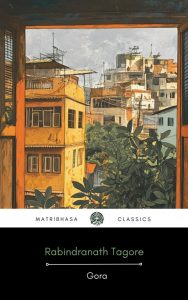
On a morning in the month of Shravan, the clouds had parted and clear sunlight filled the sky over Calcutta. The streets were unceasing in their traffic of carriages and horses; hawkers called out without pause; to the homes of those who would go to office, college, or court, baskets of fish and vegetables had arrived, and smoke rose from kitchen hearths as the morning fires were lit — and yet for all that, this great city of toil, this hard-hearted Calcutta with its hundreds of streets and lanes, seemed today to bear through it all a stream of golden light, like the flowing current of some wondrous youth.
On such a day, with no work to occupy him and no pressing errand, Binoybhushan stood alone on the second-floor veranda of his lodgings, watching the movement of the crowd below. His studies at college had long since come to an end, yet he had not entered the life of the world either — such was Binoy’s situation. He had given his attention to running committees and writing for newspapers, but these had not filled his mind entirely. At least this morning he could not think what to do with himself, and his thoughts grew restless. On the roof of the neighbouring house, three or four crows were cawing over something, and a pair of sparrows in one corner of his veranda were encouraging each other with chirping sounds in the matter of building their nest — all this inarticulate birdsong was stirring within Binoy’s heart some vague and nameless emotion.
A Baul in a long robe came and stood before a nearby shop and began to sing — The unknown bird within the cage, how does it come and go, Could I but catch it, I would put a fetter on its feet.
Binoy felt the desire to call the Baul over and write down that song of the unknown bird, but just as in the early morning chill one feels the cold and yet cannot rouse oneself to pull up the blanket, so a certain languor prevented him from calling out, prevented him from writing — and only the melody of that unknown bird went humming on within his mind.
At that very moment, directly in front of his lodgings, a large private carriage came down upon a hired hack, smashed one of its wheels, and sped away without a backward glance. The hired carriage did not overturn completely but lurched and fell to one side.
Binoy hurried out into the street and saw that a young woman of seventeen or eighteen had descended from the carriage, and that from inside, an elderly gentleman was in the act of attempting to alight.
Binoy helped him down, supporting him on either side, and seeing that the old man’s face had gone pale, asked, “You have not been hurt, I hope?”
He attempted a smile, saying “No, nothing has happened,” but the smile faded at once, and he was on the verge of fainting. Binoy caught hold of him and said to the anxious young woman, “My house is right here in front — come inside.”
Once the old man had been laid on the bed, the young woman looked around and saw a clay water-pitcher in the corner of the room. Without a moment’s delay she poured water into a glass, sprinkled some on the old man’s face, fanned him, and said to Binoy, “Would it not be well to send for a doctor?”
There was a doctor close by. Binoy sent a servant to fetch him at once.
On one side of the room, on a table, lay a mirror, a bottle of hair-oil, and the implements for combing one’s hair. Binoy stood behind the young woman and gazed fixedly at the mirror, motionless.
From childhood Binoy had lived and studied in Calcutta lodgings. Whatever acquaintance he had with the world had come to him through books. He had never in his life had any acquaintance with a respectable lady who was unrelated to him.
Looking into the mirror, he saw the reflection of a face — what a beautiful face it was! He had no experience of looking at each feature of a face separately and judging it. He only saw the tender brightness of that young face, bent in anxious tenderness, and it struck his eyes as though it were some newly-revealed wonder of creation he had never encountered before.
A little while later the old man slowly opened his eyes and, drawing a long breath, said, “Mā.” The young woman’s eyes brimmed with tears; she lowered her face close to his and asked in a soft, moved voice, “Father, where does it hurt?”
“Where have I come to?” the old man said, and as he made to sit up, Binoy came forward and said, “Please do not rise — rest a little. The doctor is coming.”
Then everything came back to him and he said, “There is a slight pain here, at this part of my head, but it is nothing serious.”
At that very moment the doctor arrived, his shoes creaking with each step, and he too pronounced, “Nothing of any consequence.” He prescribed a little brandy in warm milk, and as soon as he had gone the old man became extremely embarrassed and agitated. His daughter, understanding what was in his mind, said, “Father, why are you flustered? We will send the doctor’s fee and the cost of the medicine from home.”
Saying this, she looked at Binoy’s face.
What extraordinary eyes those were! Whether they were large or small, dark or light — such questions simply did not arise; at first glance one felt only that this gaze held an unmistakable authority. There was in it no hesitation, no diffidence; it was filled with a calm and steady power.
Binoy tried to speak: “The fee is really quite trifling, so — you needn’t — that is, you — I mean I —”
With the young woman’s eyes fixed upon him he could not manage to finish the sentence properly. Yet it became perfectly clear that he would have to accept the money for the doctor’s fee.
The old man said, “Look here, the brandy is quite unnecessary for me —”
His daughter interrupted him, saying, “But why, Father? The doctor only just said so.”
The old man said, “Doctors always say such things — it is a prejudice of theirs. Whatever little weakness I feel will pass with a little warm milk.”
Having drunk the milk and regained his strength, the old man said to Binoy, “Let us go now. We have put you to great trouble.”
The young woman looked at Binoy’s face and said, “A carriage —”
The old man drew back, embarrassed, and said, “Why trouble him again? Our lodging is close by — we can walk this short distance.”
The young woman said, “No, Father, that cannot be.”
The old man said no more on the matter, and Binoy himself went and hailed a carriage. Before getting in, the old man asked him, “What is your name?”
Binoy. My name is Binoybhushan Chattopadhyay.
The old man said, “My name is Pareshchandra Bhattacharya. I live quite nearby, at number 78. If ever you find a moment of leisure and care to visit us, I shall be very glad.”
The young woman raised both eyes to Binoy’s face and silently seconded this invitation. At that moment Binoy was perfectly ready to get into the very carriage with them and go to their house, but not being certain whether that would be quite proper behaviour, he remained standing where he was. As the carriage moved off, the young woman gave Binoy a small nod of farewell. For this Binoy was entirely unprepared, and in his bewilderment he failed to return the salutation. He went home nursing this small failure, reproaching himself for it again and again. From the moment of meeting until the moment of parting, he went over his own conduct from beginning to end; he felt that throughout he had revealed himself as altogether boorish. He dwelt inwardly on what he ought to have done at each moment, what he ought to have said — a futile turning-over that would not cease. Coming back to his room he found, lying on the bed, the handkerchief with which the young woman had wiped her father’s face — he quickly snatched it up. Within his mind the Baul’s melody played on: The unknown bird within the cage, how does it come and go.
The morning wore on; the monsoon sun grew fierce; the stream of carriages rushed toward the offices; Binoy could not bring his mind to bear on any task of the day. Such deep joy mingled with such piercing ache he had never known in all his years. His little lodging and the graceless Calcutta all around were transformed into an enchanted realm — a kingdom where the impossible becomes possible, where the unattainable is attained and the extraordinary appears in visible form; into such a realm beyond ordinary law Binoy felt he was wandering. The luminous brightness of that monsoon morning’s sunlight entered his mind, coursed through his blood, and fell before his inward eye like a shining curtain, hiding completely all the pettiness of everyday life. Binoy felt an urge to reveal his full self in some remarkable fashion, but finding no means to do so his spirit became tormented. Like the most ordinary of men he had presented himself — his lodgings were far too humble, his things quite disordered, his bed not clean; on some days he would arrange a bunch of flowers in his room, but by his ill fortune not a single petal had been there that day. Everyone said that Binoy could speak so beautifully extempore in public that in time he would become a great orator, yet on that day he had not uttered a single word that bore any trace of intelligence. He kept thinking to himself: “If only it had been possible — when that great carriage was about to come crashing down upon theirs — for me to have darted into the middle of the street with the swiftness of lightning and, with perfect ease, seized the reins of those plunging horses and brought them to a halt!” When this vision of his own imagined heroism arose in his mind he could not refrain from stepping before the mirror to look at himself.
Just then he noticed a boy of seven or eight standing in the street, looking at the number on his house. Binoy called from above, “Here — yes, this is the place.” It did not occur to him for a single moment to doubt that the child had been looking for his house. Hurrying down the stairs, his sandals slapping with each step, he brought the boy inside and looked eagerly into his face.
The boy said, “My elder sister sent me.”
Saying this, he placed a letter in Binoybhushan’s hand.
Binoy took the letter and first looked at the outside of the envelope — on it his name was written in clear, neat, feminine English letters. Inside there was no written note at all, only a few coins.
The moment the boy made to leave, Binoy refused to let him go on any account. Taking him by the hand, he led him up to the room on the second floor.
The boy’s complexion was darker than his sister’s, but there was a certain resemblance in the shape of his face. Seeing him, Binoy felt a great tenderness and delight spring up within him.
The boy was quite at his ease. No sooner had he entered the room than he noticed a picture on the wall and asked, “Whose picture is this?”
Binoy said, “This is the picture of a friend of mine.”
The boy asked, “A friend’s picture? Who is your friend?”
Binoy smiled and said, “You won’t know him. My friend is Gaurimohan — I call him Gora. We have studied together since we were children.”
“Do you still study?”
“No, I study no more.”
“Has a-l-l your studying been done?”
Binoy, unable to resist the temptation to boast even before this small boy, said, “Yes, all my studying has been done.”
The boy was astonished and let out a small sigh. He was perhaps wondering how many years it would take before he too could finish so much learning.
Binoy. What is your name?
“My name is Shri Satishchandra Mukhopadhyay.”
Binoy said, surprised, “Mukhopadhyay?”
Then, little by little, the story emerged. Pareshbabu was not their father — he had reared these two siblings, brother and sister, from childhood. The elder sister’s name had formerly been Radharani; Pareshbabu’s wife had changed it and given her the name Sucharita.
Before long, Binoy and Satish had become fast friends. When Satish prepared to go home, Binoy asked, “Can you find your way alone?”
He answered proudly, “Why, I always go alone!”
Binoy said, “Let me walk you home.”
Seeing this doubt cast upon his capabilities, Satish was put out and said, “Why? I can go alone perfectly well.” And he proceeded to cite several remarkable instances of his solitary comings and goings. Yet the boy could not quite understand why Binoy should accompany him all the way to the door of his house.
Satish asked, “Will you not come inside?”
Binoy, bringing his whole desire firmly under control, said, “I will come another day.”
Returning home, Binoy took the addressed envelope from his pocket and looked at it for a long time — every stroke and shape of each letter became fixed in his memory — and then he placed the envelope, money and all, carefully inside his box. There was no likelihood that those few coins would ever be spent in any time of hardship.
© 2026 Matribhasa Classics. Public Domain

Comments (0)
Log in to join the conversation.